
close
Choose Your Site
Global
Social Media
Views: 0 Author: Site Editor Publish Time: 2026-05-27 Origin: Site


Marketing jargon often confuses parents navigating the potty training phase. Brands use the terms "pull-ups" and "training pants" interchangeably. However, they represent fundamentally different tools. Transitioning toddlers out of standard diapers is already challenging. You need to choose the right intermediate step. Picking the wrong garment can accidentally stall your child's progress. You might wonder which option actually promotes learning. We understand this struggle. This article provides a clear, evidence-based evaluation of both options. We compare their physiological feedback, overall expenses, and practical implementation. You will discover exactly what each garment does. We break down the pros and cons of disposables versus reusables. Ultimately, this guide helps you decide which specific product to buy. It aligns your choice directly with your toddler's current readiness stage.
Terminology: Pull-ups are essentially slip-on disposable diapers; true baby training pants are reusable, padded underwear designed to hold small accidents while letting the child feel wetness.
Biofeedback: Training pants accelerate learning by providing immediate sensory feedback (wetness), whereas pull-ups wick away moisture, potentially confusing the toddler.
Cost Efficiency: While disposables have a low upfront cost, investing in multipacks of reusable training pants is significantly cheaper over a 3-to-6-month training timeline.
Phased Approach: Most successful transitions use both strategically—training pants at home during active learning, and pull-ups for travel or unaccommodating daycares.
Parents often stand in the baby aisle feeling overwhelmed. The packaging looks similar. The marketing promises sound identical. You must understand the fundamental engineering of each product. They influence your toddler's learning process in completely opposite ways.
Manufacturers design pull-ups for parental convenience. They look like underwear but function exactly like traditional diapers.
Material & Mechanism: Pull-ups rely on super-absorbent polymers (SAP). These chemical crystals absorb liquid instantly. They turn urine into a dense gel. This prevents the liquid from touching the skin.
Primary Function: A pull-up contains heavy voids. It wicks moisture away rapidly. You gain immense convenience during busy days. However, your child receives minimal sensory feedback. The toddler pees, but they still feel dry and comfortable. This interrupts the crucial mind-body connection.
Common Mistake: Many parents use pull-ups as the primary potty training tool. They assume the "pull-down" motion teaches the child. In reality, the child treats it like a normal diaper.
True training pants prioritize biofeedback. They serve as a vital stepping stone between diapers and bare underwear.
Material & Mechanism: Manufacturers make these from natural fibers like cotton or bamboo. They feature a concealed absorbent core. An outer waterproof TPU or PUL layer surrounds this core. This combination traps liquid inside the garment.
Primary Function: They capture small leaks rather than massive, full-bladder voids. Designers specifically craft them to let the toddler feel uncomfortable wetness. This physical discomfort triggers the mind-body connection. The child realizes they are peeing. This realization is an absolute requirement for successful potty training.
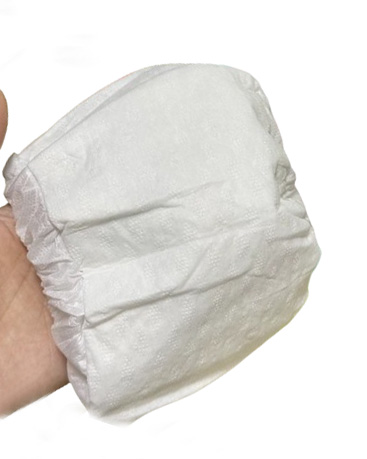
Choosing between these two options requires evaluating your daily routine. You must balance psychological development against household convenience.
Biofeedback remains the cornerstone of modern potty training frameworks. Your child needs a physical signal to connect bodily functions to external results.
The Risk of "Diaper Confusion": Toddlers cannot differentiate between the feel of a standard diaper and a disposable pull-up. The bulk feels similar. The immediate dryness feels identical. This similarity causes "diaper confusion." It delays the cognitive association between releasing the bladder and feeling wet. The toddler simply continues their diaper habits.
The Learning Catalyst: High-quality waterproof training pants for toddlers bridge this developmental gap. They look exactly like "big kid" underwear. They pull up and down easily. They provide just enough absorption to save your expensive carpet. More importantly, they provide the necessary wet sensation. When an accident happens, the child feels it instantly. This accelerates the learning curve dramatically.
You cannot ignore the reality of daily clean-up. Each family has different tolerances for laundry and messes.
Feature | Disposables (Pull-Ups) | Reusables (Training Pants) |
|---|---|---|
Solid Waste Handling | Easy tear-away sides. Roll up and throw in the trash. | Requires dumping solid waste into the toilet before washing. |
Laundry Burden | Zero laundry generated. High trash output. | Requires a structured, daily or bi-daily laundry routine. |
Floor Protection | Excellent. Can hold massive volumes without dripping. | Moderate. Holds small trickles perfectly. Major voids may leak down legs. |
Disposables: They offer easy tear-away sides for solid waste. You generate zero laundry. They are ideal for road trips or chaotic mornings.
Reusables: They demand a structured routine. You must dump solid waste in the toilet before washing the garment. You will run the washing machine more frequently.
Parents often rely on pull-ups as a safety net. They keep buying them just in case. Some children wear disposables for 12 to 18 months during the day. This prolonged use stifles independence.
Conversely, cloth options force a quicker transition to standard underwear. The natural consequence of an accident is immediately apparent to both the child and the parent. You both want to avoid the wet feeling. This mutual motivation drastically shortens the overall potty training timeline.
Financial impact plays a massive role in parenting decisions. Let us evaluate the true expenditure required for a successful transition.
Disposables seem cheap at the grocery store. You buy a single pack for fifteen dollars. However, potty training takes time. The average daily usage is roughly 4 to 6 pull-ups per day. Over a standard 6-month potty training window, this usage translates to hundreds of dollars in recurring expenses. You essentially pay a monthly subscription fee for delayed learning.
Cloth options require a higher initial purchase. However, they eliminate recurring monthly costs entirely. An upfront investment in 10 to 15 pairs of baby training pants covers the entire training period. You never need to run to the store for emergency supplies.
Even factoring in the purchase of super low-cost baby training pants alongside a few premium waterproof options, the overall expenditure is drastically lower for a single child. You can wash budget-friendly multi-packs easily. Better yet, you can save them in a closet for future siblings. This makes them a durable, long-term household asset.
Cost Comparison Chart (Estimated 6-Month Period):
Product Type | Average Cost Per Unit | Units Used (6 Months) | Total Estimated Expenditure |
|---|---|---|---|
Disposable Pull-Ups | $0.35 - $0.50 | 900 (5 per day) | $315 - $450 |
Reusable Training Pants | $4.00 - $12.00 | 15 (Washed repeatedly) | $60 - $180 |
Successful parents do not stick to just one product. They use a phased approach. They match the garment to the child's developmental milestone. Here is an evidence-based roadmap.
In this phase, the child walks confidently. They show interest in the bathroom. However, they cannot predict their bodily functions yet.
Best Choice: Pull-ups (optional).
Action Plan: Use them strictly for teaching physical mechanics. Show the toddler how to push pants down and pull them up. Do not expect them to recognize the urge to pee. Do not initiate active toilet training yet.
You commit to intense training. You stay home for a long weekend. You focus entirely on bathroom habits.
Best Choice: Bottomless, followed immediately by cloth options.
Action Plan: Start completely bottomless to build awareness. Once they grasp the concept, introduce cloth. Immediate sensory feedback is mandatory here. Avoid disposables entirely at home during this stage. Using them will cause instant regression.
Your child knows how to use the potty. They still have occasional minor accidents. You need to leave the house.
Best Choice: High-quality reusable cloth options.
Action Plan: Use them for trips to the grocery store or the park. They provide enough security to prevent a public puddle. They maintain the strict "underwear" expectation. The child knows they must keep them dry.
Daytime and nighttime dryness are entirely different milestones. Nighttime dryness relies on a hormone called vasopressin. It is a biological development, not a learned behavior.
Best Choice: Nighttime-specific pull-ups or highly absorbent overnight diapers.
Action Plan: Do not use daytime tools for the night. They are not equipped for overnight volumes. Keep the child in overnight disposables until they wake up dry consistently for two straight weeks.
The perfect plan often collides with messy reality. You will encounter external rules and sizing issues. Prepare for these common hurdles.
Childcare facilities operate under strict health department regulations. Many preschools and daycares strictly require disposables for sanitary reasons. They will not accept cloth until a child is 100% accident-free.
Strategy: Use a hybrid approach. Use cloth exclusively at home and on weekends. Send the child to daycare in disposables. You must communicate this clearly to your toddler. Tell them, "These are your special school pants, but at home, we wear our cloth underwear." Consistency in your messaging helps bridge the gap between different environments.
Best Practice: Ask your daycare provider if they allow a plastic cover over cloth underwear. Some facilities accept this compromise.
Fit determines function. A poorly fitted garment ruins the entire process.
Disposables: These stretch generously. They rely on elastic panels to accommodate various body types. Age and weight charts on the box are usually accurate enough.
Reusables: These require precise sizing. If the thigh holes are too loose, urine will run straight down the child's leg. Always measure the toddler's waist and upper thighs with a flexible tape measure. Never rely strictly on generic age or weight charts. A snug fit around the leg gussets prevents devastating floor puddles.
Choosing the right potty training tool eliminates unnecessary frustration. Remember this basic decision framework: choose pull-ups for parental convenience, travel situations, and strict daycare compliance. Choose true reusable cloth options for active, at-home learning and essential physiological biofeedback.
Here are your immediate next steps:
Audit your toddler's current readiness signs. Look for periods of prolonged dryness and an interest in the toilet.
If they show active readiness, purchase a 6-to-10 pack of reusable cloth options.
Clear your calendar for an upcoming weekend.
Commit fully to active biofeedback training at home without disposable crutches.
A: Generally, no. Standard reusable options lack the capacity for heavy overnight voids. They are designed to catch small daytime trickles. Nighttime dryness is a hormonal milestone, not a behavioral one. We strongly recommend using specialized nighttime disposables or highly absorbent overnight diapers until your child's body achieves full hormonal readiness.
A: Yes, they will contain solid waste effectively. The snug elastic legs prevent physical messes from dropping onto your floor. However, they are not designed to absorb the heavy moisture of diarrhea like a disposable diaper does. You will need to dump the solid waste into the toilet promptly before washing the garment.
A: A solid baseline is typically 8 to 12 pairs. This number depends heavily on your laundry frequency and your toddler's accident rate during the first week. If you plan to wash clothes every single night, 8 pairs might suffice. If you prefer washing every other day, aim for 12 to 15 pairs to avoid running out.


