
close
Choose Your Site
Global
Social Media
Views: 0 Author: Site Editor Publish Time: 2026-03-05 Origin: Site


Expectant parents often face a common logistical challenge. They want to ensure an adequate supply of diapers without stressing over sudden stockouts. At the same time, they dread wasting money on sizes their baby will quickly outgrow. Balancing the risk of late-night stockouts against the financial drain of unused inventory creates real anxiety. No one wants to run out of supplies at 3 AM with a crying infant. Conversely, storing boxes of outgrown nappies wastes valuable resources and closet space. Our objective is to provide a data-backed, realistic purchasing framework for these essential items. We will explore actual consumption rates and sizing transitions to guide your choices. You will also learn cost-effective purchasing strategies to protect your budget. We will compare retail bulk buying to flexible direct-to-consumer subscriptions. Ultimately, you will gain the confidence to build a smart stockpile tailored entirely to your baby's actual daily needs.
Newborns average 8 to 12 diaper changes per day during the first month.
Most infants outgrow "Newborn" (NB) sizes within 2 to 4 weeks; over-stockpiling this specific size is a high-probability financial risk.
A blended procurement approach—buying a small buffer of NB sizes and a larger stock of Size 1—optimizes your initial investment.
Total Cost of Ownership (TCO) for the first year depends heavily on sourcing strategy: retail bulk buying versus flexible direct-from-brand subscriptions.
Medical professionals usually measure infant health through excretory output. Pediatricians track wet and dirty nappies closely. This tracking ensures the baby receives adequate nutrition and hydration. Parents frequently ask, How many total diapers does a newborn need? The standard medical baseline dictates 8 to 12 changes daily. This high frequency dominates the first 30 days of life.
Let us calculate the first month volume. If you multiply 8 to 12 changes by 30 days, the math becomes clear. You will need approximately 240 to 360 units for the first month alone. This volume often surprises many new parents. However, maintaining this baseline prevents severe discomfort for the infant.
Several variables drive this frequency. Feeding type plays a massive role in excretory habits. Breastfed babies often soil their garments more frequently than formula-fed infants. Breastmilk digests very quickly. Consequently, breastfed infants might require changes on the higher end of the baseline. Formula takes slightly longer to digest, potentially reducing daily changes slightly.
Skin sensitivity is another major factor impacting usage. Some babies develop rashes easily. You must change them immediately after they soil themselves. This rapid response protects their delicate skin barrier. Leaving a sensitive infant in a wet nappy even briefly can trigger severe dermatitis. Therefore, you might find yourself changing them 12 to 14 times a day initially.
Babies grow unpredictably. Relying strictly on static consumption models carries inherent risks. A sudden growth spurt can render your carefully calculated stash obsolete overnight. Adaptive purchasing provides a much safer route. Buy enough to feel secure, but keep your inventory nimble. We recommend treating the baseline as a guide rather than a strict law.
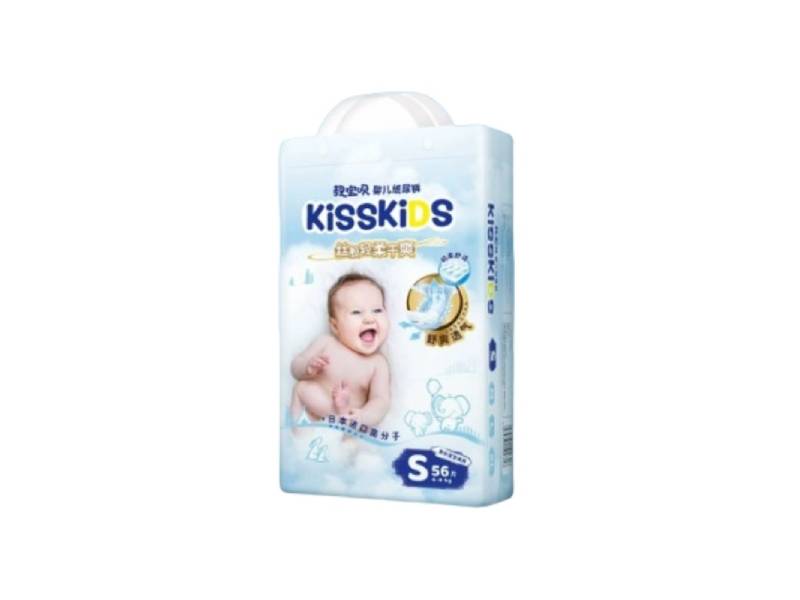
One of the biggest debates among expecting parents is sizing. Do you need newborn diapers or just size 1? To answer this accurately, we must look at weight classifications and fit criteria. Every brand sizes slightly differently, but industry standards follow a predictable pattern.
| Size Category | Standard Weight Range | Key Fit Characteristics |
|---|---|---|
| Newborn (NB) | Up to 10 lbs | Features a U-shaped umbilical cord cutout. |
| Size 1 | 8 to 14 lbs | Taller waistband, wider leg cuffs, higher absorbency. |
Notice the overlap between 8 and 10 pounds. Both sizes technically fit a 9-pound infant. However, fit goes beyond mere weight. A Size 1 might gap around slim legs. This gapping leads to leaks. Conversely, a Newborn size might feel too tight across a wider waist. You must evaluate the overlap based on your baby's specific build.
Use a simple decision framework for your purchasing. First, evaluate prenatal estimates. If your baby is tracking large via ultrasound, act cautiously. Limit your initial stock to one small pack. You should prioritize building your Size 1 stash instead. Ultrasounds carry a margin of error, but they provide a useful directional cue.
Second, consider the umbilical cord. The umbilical stump takes one to two weeks to fall off. Many baby diapers newborn products feature a specific U-shaped cord cutout. This cutout prevents painful rubbing and potential infection. Size 1 options usually lack this essential feature. This single feature makes having at least a small NB stash highly practical.
We strongly recommend keeping your initial inventory strictly limited. A one-to-two week supply of the smallest size is perfectly adequate. You can always buy more if your baby stays small. Over-committing early is a common financial mistake.
Practical benchmarks help us visualize the commitment. Many bulk boxes at retail stores contain roughly 200 units. How long will 200 diapers last a newborn? We can find the accurate answer through basic math.
Take your 200 units. Divide them by the standard daily usage rate of 8 to 12. The math is straightforward. If you use 12 per day, the box lasts about 16 days. If you use 8 per day, it stretches to 25 days.
The outcome is quite revealing. A 200-count box will last approximately 16 to 25 days. This timeline exposes a significant financial risk. A single 200-count box is often the absolute maximum a single child will use in the NB size. Most infants pack on enough weight to require the next size up before week four.
Purchasing more than one 200-count box typically results in dead stock. You will end up storing boxes you cannot use. It is far better to run to the store for a small pack than to waste a massive bulk box.
Best Practices for Initial Stockpiling:
Buy only one large box of the smallest size.
Supplement with smaller 30-count packs if needed.
Keep the receipt taped directly to the bulk box.
Leave the box factory-sealed until the exact moment you need it.
Looking beyond the first month, parents should forecast the Total Cost of Ownership (TCO). How many diapers does a newborn use in a year? Usage curves decline steadily as the baby ages. Bladder capacity increases significantly. Bowel movements also stabilize as the digestive system matures.
| Age Range | Daily Average Changes | Estimated Total per Period |
|---|---|---|
| Months 1-3 | 10 changes per day | ~900 units |
| Months 4-6 | 8 changes per day | ~720 units |
| Months 7-12 | 6 changes per day | ~1,080 units |
| First Year Total | - | 2,500 to 3,000 units |
Calculate your baseline financial commitment. Multiply the average cost per unit by this annual volume. A 20-cent unit equates to roughly $500 to $600 annually. Do not forget the hidden costs of waste. Outgrown sizes sitting in your closet inflate your true TCO significantly. You must account for these hidden drivers.
Compare features to outcomes when selecting brands. Premium or eco-friendly options carry a higher upfront cost. However, they potentially offer lower rash incidence. They often feature better breathability. Value brands offer a lower cost per unit. Yet, they might require a higher change frequency to prevent leaks. You must weigh these dimensions carefully to find your ideal balance.
Common TCO Forecasting Mistakes:
Stockpiling based on early usage rates for the entire year.
Ignoring the frequency reduction around month four.
Forgetting to factor in specialized nighttime products later on.
Sourcing your baby diapers requires a deliberate strategy. You must evaluate different options to protect your budget and your sanity. Convenience and cost often pull parents in opposite directions.
Retail and big box stores offer traditional bulk buying. This approach usually provides a lower cost per unit. However, it requires significant physical storage space in your home. It also carries a high risk of size lock-in. If your baby suddenly outgrows their current size, those 150 remaining units become useless.
Partnering directly with a baby diapers manufacturer or a Direct-to-Consumer (D2C) brand offers a different experience. It usually means a higher per-unit baseline cost. Yet, this is often offset by extreme flexibility. You get automatic size updates and bundle discounts delivered right to your door. You avoid late-night store runs entirely.
Apply simple shortlisting logic to your decision. Choose D2C subscriptions if convenience matters most. If size flexibility outranks absolute lowest unit cost, subscriptions win. Choose retail bulk if budget optimization is your primary success criterion. You can also blend these strategies. Use subscriptions for the unpredictable early months. Switch to bulk buying once sizing stabilizes around month six.
Always factor in vendor exchange policies. Look for favorable rules on unopened boxes. This is a critical requirement when selecting a primary retailer or brand. It serves as an essential financial safeguard against unpredictable growth spurts. Never buy from a vendor who refuses size exchanges on sealed boxes.
Managing your infant's supply does not have to be stressful. By understanding actual consumption rates, you can protect your budget and your sanity. Start with a maximum of one to two weeks' worth of the smallest sizes. Then, immediately transition to building a Size 1 inventory. Always keep your receipts. Leave your bulk boxes unopened until you actually need them. This simple habit maintains your eligibility for size exchanges at major retailers. Finally, reassess your baby's fit and weight every two weeks. Do this before reordering new inventory to ensure you always buy the correct size.
A: Look for clear physical indicators. Red marks on your baby's thighs suggest a tight fit. Frequent blowouts also signal that the current size cannot contain the volume. Additionally, check the fastening tabs. If they do not comfortably reach the center of the waistband, it is time to size up.
A: Yes, in most cases. Standard retail policies at major big-box stores typically allow size exchanges. The boxes must be unopened and factory-sealed. Many stores will process these size exchanges even without a receipt, though you may only receive store credit or an even exchange for a different size.
A: Yes, but strictly limit your stockpile. Buying a massive mountain of a single size is highly risky. Instead, create a mixed-size "diaper fund" or registry. This approach defers your actual purchasing until your baby arrives. Once their true birth weight and growth curve become established, you can buy confidently.


