
close
Choose Your Site
Global
Social Media
Views: 0 Author: Site Editor Publish Time: 2025-10-23 Origin: Site


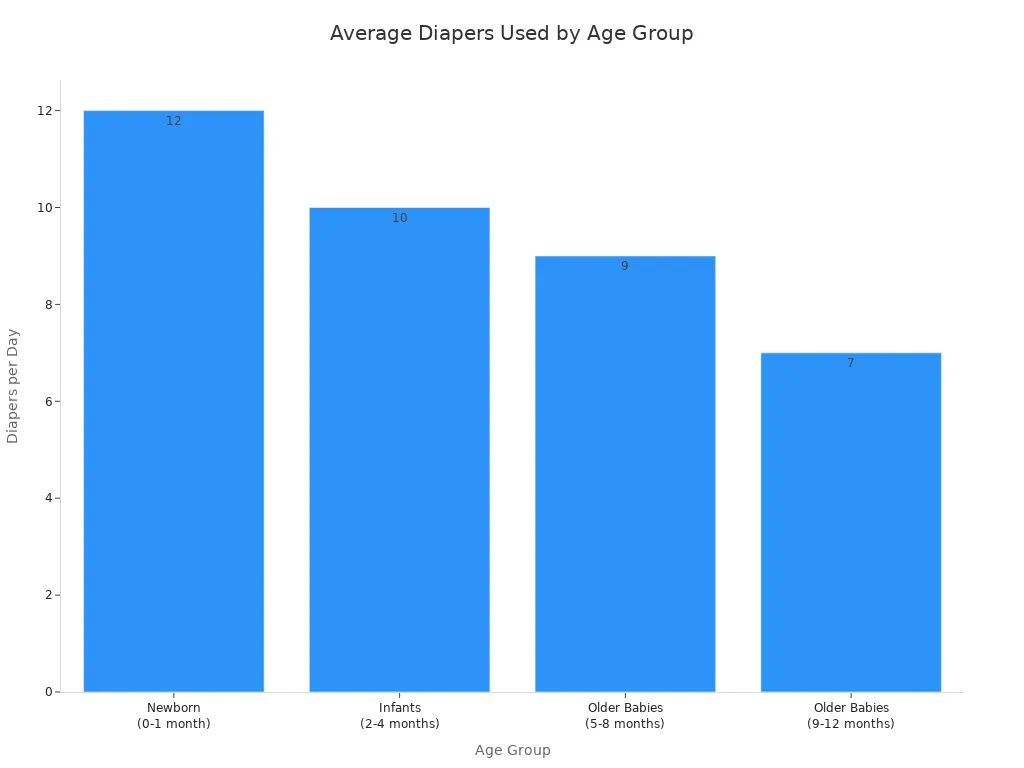
Wondering how many diapers your little one will need each day? Most newborns go through up to 12 diapers a day, while infants use around 10, and older babies may need 7 to 9. Here’s a quick look:
Age Group | Average Diapers per Day |
|---|---|
Newborn (0-1 month) | Up to 12 |
Infants (2-4 months) | Up to 10 |
Older Babies (5-8 months) | Up to 9 |
Older Babies (9-12 months) | Up to 7 |
Every baby is unique, so don’t worry if your numbers look a little different. You can plan ahead by keeping a few extra on hand. Diapersun focuses on making infant diapers that keep your baby dry, comfortable, and safe—so you can feel confident every day.
Newborns often use up to 12 diapers each day. Infants and older babies need fewer diapers as they get bigger. Watch your baby's habits to know when to change diapers. Check every 2 or 3 hours for a dirty diaper. Change dirty diapers right away to stop rashes. Plan your diaper shopping by guessing how many you need each month. Use your baby's age and daily use to help you plan. Pick the right diaper size for comfort and to stop leaks. If you see red marks, it may be time to get a bigger size. Diapersun has safe, comfy, and eco-friendly diapers for every stage your baby grows through.
Knowing how many diapers your baby needs helps you plan. This way, you won’t have to rush to the store. Babies need different amounts as they grow.
Many parents ask how many diapers a newborn uses. Newborns pee and poop a lot because their bladders are small. Most newborns need 10 to 12 diaper changes each day. Your baby might wet a diaper every 1 to 3 hours. Dirty diapers often happen after feedings.
Here’s a quick look at the usual number for newborn diapers:
Type of Diaper | Expected Count per Day |
|---|---|
Wet Diapers | 6 to 10 |
Dirty Diapers | 3 to 4 |
Most babies use newborn diapers for 2 to 4 weeks. This depends on how fast your baby grows and their birth weight. Some babies move to the next size quickly. Others stay in newborn diapers longer. If you use Diapersun baby diapers, you can trust their safety and quality. They meet ISO9001, CE, and FDA rules. These diapers keep your newborn dry, comfy, and safe all day.
After the newborn stage, diaper needs change a little. Babies from 1 to 5 months still need many changes. But you will use a bit fewer diapers each day. Most infants in this group need 8 to 10 diapers daily.
Babies still pee a lot at this age. Bowel movements may slow to 1 or 2 times a day, especially for breastfed babies.
It’s smart to keep extra diapers ready for your infant.
Baby’s Age (months) | Diaper Changes | Why |
|---|---|---|
Newborns (0–1 Month) | 10–12 times a day | Newborns pee very often, almost every 1 to 3 hours. They may also poop after nearly every feeding. |
Infants (1–5 Months) | 8–10 times a day | Still urinating frequently, but bowel movements may reduce to 1–2 times a day (especially for breastfed babies). |
If you want good infant diapers, Diapersun has many choices. Their diapers are made for comfort and to stop leaks. You can check out their baby diapers to find the best one for your baby.
When your baby turns 6 months, diaper needs change again. Older babies usually need 7 to 9 diapers each day. As your baby moves more and eats solids, you may see fewer wet diapers. Dirty diapers may become more regular.
Diaper Size | Age Range | Daily Usage |
|---|---|---|
Size 2 | 3 to 8 months | 8 to 9 per day |
Size 3 | 5 to 24 months | 6 to 7 per day |
Tip: Watch your baby’s growth and activity. Some babies need more changes during growth spurts or teething.
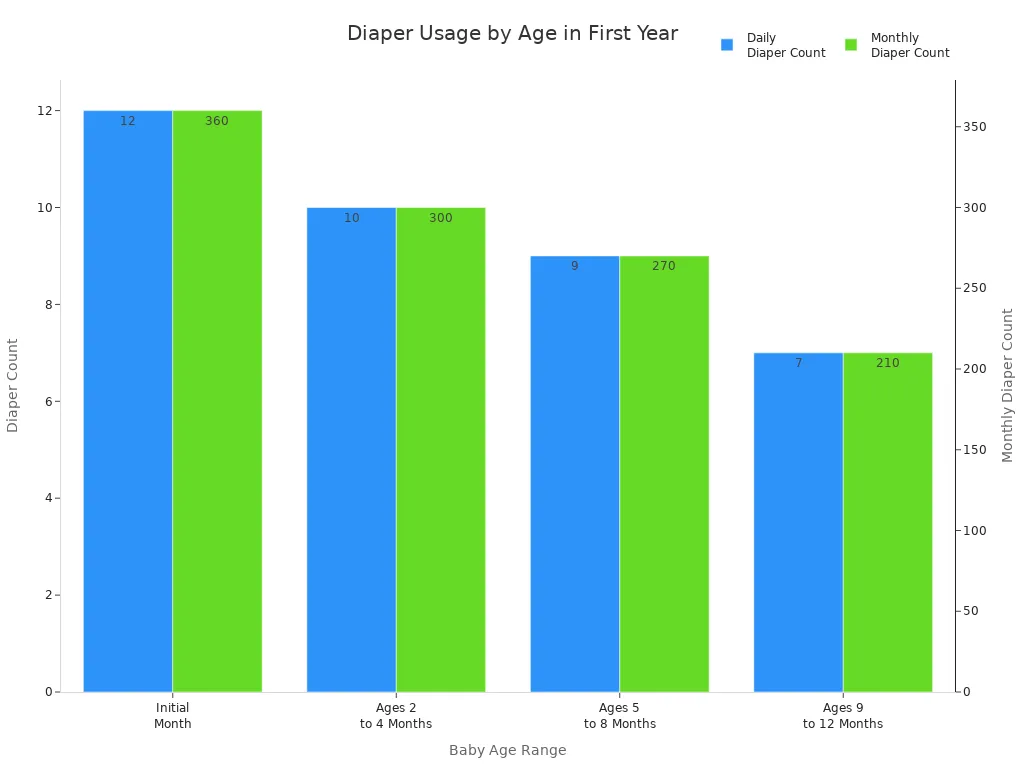
You can see diaper use goes down as babies get older:
Picking the right diaper for each age is important. Diapersun makes baby diapers that are soft and gentle. Their diapers are checked for quality, so you can trust them every day.
If you wonder how many diapers a newborn uses or how many you’ll need as your baby grows, remember this: Every baby is different. These numbers help you plan and keep your baby happy and dry.
All babies are different. Your baby may need more or fewer diaper changes than others. Many things can change how many diapers you use each day. Here are the main reasons.
Feeding and drinking affect diaper changes a lot. Babies who breastfeed often have more wet diapers in the first weeks. If your baby eats often and poops well, they get enough milk. Formula-fed babies may have a different pattern. Both groups still need regular diaper changes.
Hydration matters too. If your baby drinks more fluids, you will see more wet diapers. Here is a table showing how hydration changes diaper output:
Time Period | Maternal IV Fluids | Diaper Output |
|---|---|---|
First 24 hours | Higher | More wet diapers |
Second 24 hours | No effect | No change |
Third day | Lower | Fewer wet diapers |
If you see fewer wet diapers, your baby may not get enough fluids. Talk to your doctor if you worry.
Your baby’s health can change diaper needs. Growth spurts make babies eat more and need more diaper changes. Some health problems, like diaper rash or urinary tract infections, mean you should change diapers more often.
Diet and growth spurts can make you use more diapers.
Not enough clean diapers can cause rashes or infections.
Fast diaper changes help stop skin problems.
If your baby seems upset or has a rash, change diapers more often and ask your doctor.
Active babies may need more diaper changes. During the day, you change diapers more because your baby is awake and playing. At night, you may change fewer diapers if your baby sleeps longer.
More daytime activity means more diaper changes.
At night, you can wait to change unless your baby wakes up or feels uncomfortable.
Good absorbent diapers keep your baby dry overnight.
Every baby is special. Watch your baby’s habits and change your routine if needed.
Changing your baby's diaper at the right time keeps them healthy. You may wonder how often to check or change diapers. Babies cannot tell you when they need a new diaper. So, you have to look for clues.
Try to check your baby's diaper every 2 to 3 hours. Change dirty diapers right away to keep your baby clean. This helps stop discomfort and diaper rash, especially for babies with sensitive skin. If your baby is sleeping at night, you do not need to wake them unless the diaper is very wet or dirty.
Babies cannot talk, but they show signs when they need a change. Watch for these hints:
Your baby is fussy or crying
The diaper feels wet and heavy
The diaper smells like poop or strong pee
Your baby makes certain sounds before going
Your baby shows signs like eye contact, fussing, stretching, or pushing
You can see these signs any time of day. Trust your feelings and check the diaper if your baby seems uncomfortable.
If you wait too long to change a diaper, your baby can have health problems. Here are the main risks:
Health Risk | Description |
|---|---|
Diaper Rash | This is common and causes discomfort. It is easier to prevent than to treat. |
Yeast Infection | Wet diapers for too long can cause painful red blisters. |
Urinary Tract Infection | This hurts and can cause serious problems, even kidney damage. |
Changing diapers often helps stop these problems. Clean, dry skin keeps your baby happy. Diapersun diapers are gentle and protect your baby, so you can feel sure every day.
Getting ready for your baby means thinking ahead about how many diapers you’ll need. You might wonder, “How many diapers do I need each month?” Let’s break it down so you can plan with confidence.
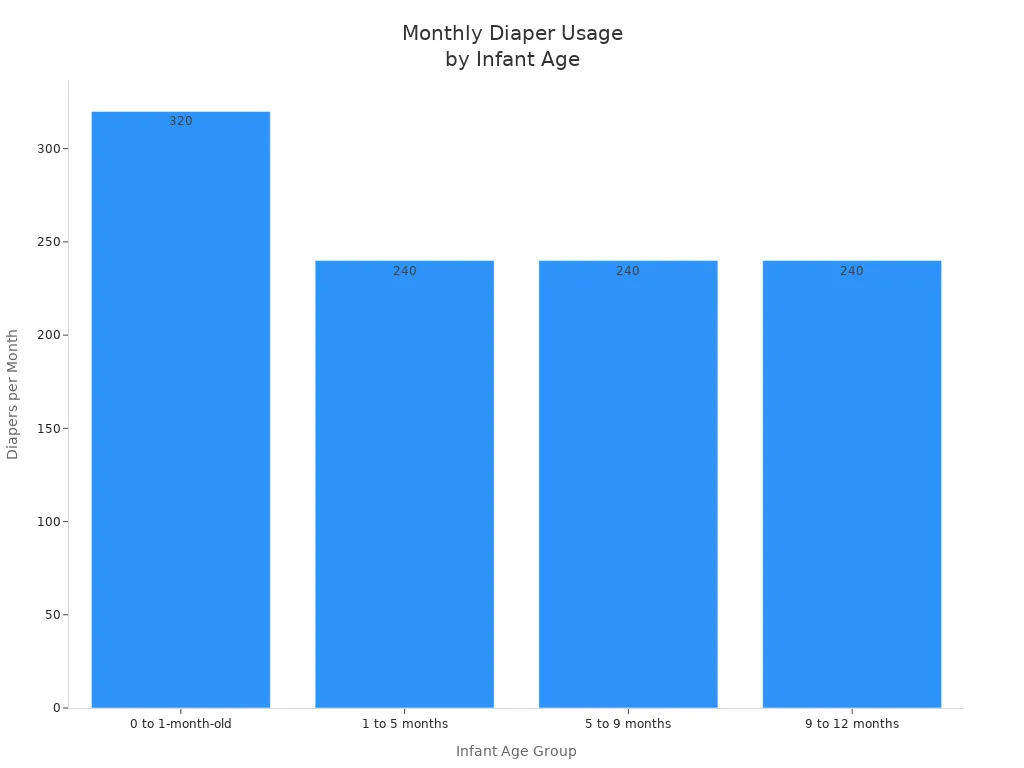
You can estimate your monthly diaper needs by looking at your baby’s age and daily diaper usage. Here’s a simple table to help you figure out how many diapers you’ll need:
Age Of The Baby | Diaper Usage Per Day | Diaper Usage In One Month |
|---|---|---|
0 to 1-month-old baby | 10 to 12 | 320 |
1 to 5 months old baby | 8 to 10 | 240 |
5 to 9 months old baby | 8 | 240 |
9 to 12 months old baby | 8 | 240 |
If you keep track of daily diaper usage, you’ll always know how many diapers to buy. This makes it easy to answer the question, “how many diapers do I need?”
Running out of infant diapers is never fun. Here are some smart ways to keep your shelves full:
Shop for deals and buy in bulk when prices are low.
Add diapers to your baby registry or ask for them as gifts.
Keep receipts so you can exchange sizes if your baby grows fast.
Check store ads and use coupons to save money.
Aim for prices around $0.15 per diaper or less.
Pro tip: Shopping at different stores and matching coupons with sales can help you save even more.
Diapersun offers a wide range of infant diapers and baby diaper pants, so you can always find the right fit and style for your baby. Their products go through strict quality checks and meet international standards, giving you peace of mind.
Diapers can be a big part of your baby budget. On average, families spend about $83 per month on diapers in the first year. That’s close to $1,000 a year. Planning ahead helps you avoid surprises.
Set aside a small amount each week for diapers.
Watch for sales to stretch your budget further.
Choose trusted brands like Diapersun for quality and value.
If you want to make diaper shopping easy, check out Diapersun’s full range of infant diapers. You’ll find safe, comfortable options for every stage—so you can focus on enjoying every day with your baby.
Choosing the right diaper sizes for your baby can feel confusing at first, but it gets easier once you know what to look for. A good fit keeps your baby comfortable and helps prevent leaks. Here’s a quick size guide to help you make the best choice.
When you pick diaper sizes, focus on how the diaper fits your baby. Every baby has a unique shape, so you might need to try a few sizes before finding the perfect one. Here are some things to check:
The diaper should fit snugly but not too tight.
You should be able to slide two fingers under the waistband.
The leg cuffs should wrap gently around your baby’s thighs.
The diaper should cover your baby’s bottom fully.
If you see red marks or your baby seems uncomfortable, try a different size.
Always check the size guide on the package. Diapersun offers a full range of diaper sizes for every stage, from preemie to toddler.
Babies grow fast, so you’ll need to move up in diaper sizes as your baby gets bigger. Watch for these signs that it’s time to switch:
The side tabs pop open often.
The waistband or leg bands feel tight.
You notice red marks around the legs or waist.
The diaper doesn’t cover your baby’s bottom.
You have more leaks than usual.
Your baby seems fussy or uncomfortable during changes.
If you spot any of these, try the next size up. Most parents switch sizes several times in the first year.
You can use this chart as a quick reference for Diapersun diaper sizes:
Diaper Size | Baby's Weight (lbs) | Approximate Age |
|---|---|---|
Preemie | Up to 6 | Premature |
Newborn (N) | Up to 10 | 0–1 month |
Size 1 | 8–14 | 1–4 months |
Size 2 | 12–18 | 3–8 months |
Size 3 | 16–28 | 5–24 months |
Size 4 | 22–37 | 18–36 months |
Size 5 | Over 27 | 3+ years |
Size 6 | Over 35 | 4+ years |
Size 7 | Over 41 | 5+ years |
Tip: Always check your baby’s weight and age before buying a new pack. This helps you choose the right size and keeps your baby happy.
With this size guide, you can feel confident about picking the best fit for your baby at every stage.
You now understand how many diapers your baby may need daily. Diaper needs change as your baby gets older. Most families use around 3,000 diapers in the first year. Look at the charts and follow the tips to plan ahead. This helps keep your baby dry and happy. Diapersun offers safe, comfy, and eco-friendly options for every age.
Remember: Picking the right diaper and changing it often helps stop rashes and keeps your baby smiling.
Factor | Eco Friendly Diapers | Traditional Diapers |
|---|---|---|
Environmental Impact | Less waste, safer for Earth | 20 billion end up in landfills yearly |
You usually need 70 to 75 diapers per week for a newborn. This helps you keep your baby dry and comfortable. Diapersun baby diapers offer great absorption and gentle materials for newborns.
Look for fussiness, a heavy or wet diaper, or a strong smell. If you see red marks or leaks, change the diaper right away. Your baby will feel happier and stay healthy.
Yes, you can use baby diaper pants for infants who move a lot. Diapersun baby diaper pants fit snugly and make changes easier. They help prevent leaks during playtime.
Check your baby’s weight and age. Use the size chart on the package. Diapersun offers a full range of sizes for every stage. If you see red marks or leaks, try the next size up.
Diapersun infant diapers use eco-friendly materials. They help reduce waste and protect your baby’s skin. You can trust their safety and comfort for every stage.


