
close
Choose Your Site
Global
Social Media
Views: 0 Author: Site Editor Publish Time: 2026-01-08 Origin: Site


Few parenting experiences are as universally frustrating as the dreaded "blowout." You find yourself awake at 3:00 AM, changing crib sheets and scrubbing a onesie, wondering why the premium diapers you purchased failed so spectacularly. It is easy to blame the manufacturer or assume the quality has declined, but in most cases, the leak is not a failure of the product itself. It is a failure of fit. Selecting the right protection for your child is far more complex than simply matching a number on a box to a birthday.
A common misconception among new parents is relying on age as the primary metric for sizing. While age correlates with development, it is a poor indicator of body volume and shape. Weight and body geometry are the superior criteria for evaluation. A six-month-old baby could easily fit into a Size 2 or a Size 4 depending on their growth curve. Moving beyond a static shopping list requires a dynamic sizing strategy—one that accounts for bladder capacity, thigh circumference, and developmental milestones.
By understanding how diaper engineering interacts with your baby’s anatomy, you can significantly reduce waste and maximize comfort. This guide moves beyond basic charts to provide a decision-making framework. You will learn how to read fit signals, when to prioritize absorbency over physical dimensions, and how to navigate the confusing overlap between sizes to ensure your baby stays dry and happy.
Weight is the Gold Standard: Age is only a rough estimate; weight and developmental stage (crawling vs. walking) determine the actual fit.
The "Jeans Theory": Sizes are not universal. A Size 3 in Brand A may fit differently than a Size 3 in Brand B due to cut and material stretch.
The Overlap Rule: Weight ranges overlap between sizes (e.g., Size 2 is 12–18 lbs, Size 3 is 16–28 lbs). If in the overlap, choose based on the baby's build (lean vs. chunky).
Usage Forecasting: Size 1 is transient; Size 3 and 4 have the longest tenure. Buy inventory accordingly.
Navigating the diaper aisle can feel overwhelming given the sheer number of options. To simplify this process, we have aggregated data from major industry standards to create a consolidated reference point. This diaper size chart serves as your baseline for purchasing decisions, merging weight ranges with expected daily usage to help you forecast costs and inventory needs.
| Size | Weight Range (lbs) | Weight Range (kg) | Approx. Age | Avg. Daily Usage |
|---|---|---|---|---|
| Preemie (P) | < 6 lbs | < 2.7 kg | Pre-term | 8–12 |
| Newborn (N) | Up to 10 lbs | Up to 4.5 kg | 0–1 Month | 8–12 |
| Size 1 | 8–14 lbs | 4–6 kg | 1–3 Months | 7–10 |
| Size 2 | 12–18 lbs | 5–8 kg | 3–5 Months | 6–9 |
| Size 3 | 16–28 lbs | 7–13 kg | 5–12 Months | 6–8 |
| Size 4 | 22–37 lbs | 10–17 kg | 12–24 Months | 5–7 |
| Size 5 | 27+ lbs | 12+ kg | 24–36 Months | 5–6 |
| Size 6 | 35+ lbs | 16+ kg | 3+ Years | 4–5 |
| Size 7 | 41+ lbs | 19+ kg | 4+ Years | 3–4 |
The earliest stage of diapering is characterized by high frequency and rapid turnover. Babies in the "Newborn" (N) category are typically up to 10 pounds. During these first few weeks, you can expect to change baby diapers between 8 and 12 times a day due to the small stomach size and frequent feeding of infants.
Decision Tip: Do not stock up heavily on Newborn sizes. Many babies are born exceeding 8 pounds and may graduate to Size 1 in as little as two weeks. Buying one or two packs at a time prevents you from being stuck with unopened boxes that no longer fit.
As your baby enters the rapid growth phase, they will transition quickly through the early numbered sizes. When evaluating size 1 diapers weight guidelines, typically 8 to 14 pounds, remember that this stage usually lasts about two to three months. The bladder capacity is increasing, but bowel movements remain frequent.
Soon after, you will move to the size 2 diapers weight range of 12 to 18 pounds. This is often where parents first encounter "blowouts" if they delay sizing up. The weight overlap here is significant, meaning a 13-pound baby could technically wear either Size 1 or Size 2, but the larger size often provides better coverage for active sleepers.
Once your baby hits the size 3 diapers weight range (16–28 lbs), physical growth velocity slows down significantly. This is the period of stability. Many parents wonder, What diaper size do babies stay in the longest? The answer is almost invariably Size 3 or Size 4. Depending on the child's build, they may remain in these sizes for nearly a year.
Because the usage stabilizes to about 5 to 7 diapers per day, this is the safest stage to commit to bulk purchases or subscription services. The risk of the child waking up one morning having suddenly outgrown a freshly opened box is much lower than in the newborn phase. If you are asking What size of diapers by age? during this phase, the answer varies wildly, but generally, babies between 6 and 18 months reside comfortably in this "long haul" zone.
When a child exceeds 35 pounds, the focus shifts from simple containment to mobility and massive absorption capacity. Toddlers are active, often running and climbing, which changes how the diaper must sit on the hips. Size 6 and Size 7 are engineered with reinforced tabs and stretchier waistbands to accommodate this movement without sagging.
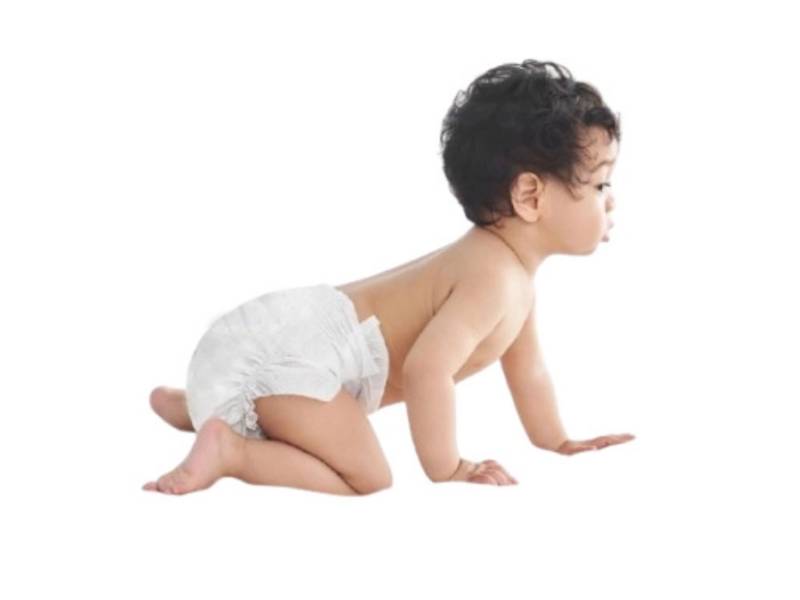
Weight charts are merely a starting point. To truly ensure leak-free performance, you must evaluate how the product fits your child's unique body geometry. We call this the "Goldilocks" evaluation—finding the fit that is not too tight, not too loose, but just right.
There are three critical zones to check every time you fasten a diaper:
Waist: The waistband should sit just underneath the belly button. If it rides too low, you risk leaks out the back; too high, and it may chafe the stomach. Use the "Two-Finger Gap" rule: you should be able to slide two fingers comfortably between the diaper and the baby’s skin. It should feel snug enough to stay up, but not constricting.
Leg Cuffs: This is the number one source of leakage. Most diapers have an inner elastic and an outer ruffle. Ensure the ruffles are pulled out (untucked). If the ruffle is tucked inside the diaper, moisture will wick onto the clothes instantly. Lift the baby's leg; if you can see a gap between the cuff and the thigh, the diaper is too big or not fastened securely.
Rise (Coverage): The rise refers to the length of the diaper from front to back. The material should fully cover the buttocks. If you can see the top of the "plumber’s crack," the diaper is too short. This lack of coverage is a primary "Size Up" signal, regardless of the baby's weight.
Just as adult clothing fits differently depending on the cut, diapers interact differently with various body shapes.
Chunky Thighs: Babies with thicker thighs often suffer from leaks because parents overtighten the tabs to close the waist, which constricts the legs. If your baby has chunky thighs, you may need to size up earlier than the weight chart suggests to get a wider leg opening. Alternatively, choose brands known for a wider cut (often Huggies) even if the weight matches a different size.
Lean/Long Torsos: For babies who are tall and slender, the issue is often the rise. They need a diaper that comes up higher on the back to prevent blowouts. Brands with a "long and lean" cut (often Pampers) can provide that necessary vertical coverage without being too loose at the waist.
Your baby’s skin tells a story. If you see red marks around the hips or thighs when you remove the diaper, the fit is too small or fastened too tightly. Conversely, look at the fastening tabs. If the tabs overlap completely in the middle, the diaper is likely too big. If you are fastening the tabs at the extreme edges of the waistband, the diaper is too small and lacks the structural integrity to hold a full load.
Many parents wait for a disaster before changing sizes. A proactive approach saves laundry and stress. If you are wondering How do I know when it's time to size up my baby's diaper?, you need to look at both physical fit and absorbency requirements.
Sizing is not just about physical dimensions; it is about the volume of the absorbent core. As babies grow, their bladder capacity increases significantly—from roughly 1.5 ounces in newborns to over 2.5 ounces in older infants. Larger diaper sizes contain more Super Absorbent Polymer (SAP), the chemical beads that lock away moisture. Even if a Size 2 still physically fits around your baby's waist, it may not contain enough SAP to handle the larger void volume of an older baby, leading to leaks.
Adopt the "Two Strike Rule." A single leak might be a fluke—perhaps the diaper was put on crookedly. However, two consecutive leaks or blowouts suggest that the current size's capacity or coverage has been exceeded. This is the most definitive answer to How to know the correct size of diaper?: when the current one fails consistently, it is time to move up.
Diaper boxes list weight ranges that overlap significantly. For example, a 17-pound baby fits in both Size 2 (12–18 lbs) and Size 3 (16–28 lbs). How do you choose?
Scenario A (Leakage/Red Marks): If you are experiencing leaks or seeing red indentations, move to the larger size immediately. The extra absorbency and looser fit will solve the problem.
Scenario B (Good Fit): If you have no leaks and the fit is comfortable, stay in the smaller size. Smaller sizes usually have a higher count of diapers per box, making them more cost-efficient per change.
Keep an eye on diet and movement. The introduction of solid foods around 6 months changes the consistency of waste, often making it bulkier. This frequently necessitates a size check to ensure the diaper has enough "pocket" space. Furthermore, once a baby starts standing or walking, the shape of their lower body changes. This is often the ideal time to switch to baby diapers pants, which offer a 360-degree stretch waistband for better containment during high activity.
Not all diapers serve the same purpose. Tailoring your product selection to the time of day and your baby's activity level can improve performance dramatically.
A standard daytime diaper is designed to be changed every 2 to 4 hours. Expecting it to last 12 hours overnight is asking for trouble. If you find your baby waking up wet, do not just tighten the tabs.
Problem: Standard cores saturate and release moisture back onto the skin (rewet) over long durations.
Solution: Use "Overnight" specific versions which have reinforced cores and higher rise backs. Alternatively, size up +1 from your daytime size for night use only. The extra bulk provides the necessary reservoir for a full night's output.
Traditional tape diapers are excellent for newborns and infants who spend most of their time lying down or sitting. They allow for a precise, snug fit. However, for the "wrestler" baby who refuses to lie still during changes, or the toddler who is exploring the world, tape diapers can sag or come undone.
Baby diapers pants (often called training pants) are essential for this stage. They pull on like underwear, making standing changes possible. Note that sizing for pants often aligns more with clothing sizes (2T–3T) or weight, rather than the standard 1–6 diaper scale. They are designed to grip the hips and move with the child.
While this guide focuses on infants, it is worth noting that sizing logic changes completely for older demographics. When selecting adult diapers, weight becomes a secondary factor. The primary metric for adults is the measurement of the waist and hip circumference in inches. Adult sizing relies on precise anatomical measurements to ensure dignity and security, differing from the weight-correlation method used for babies.
Finally, the economics of diapering cannot be ignored. Finding the right size is also about finding the right value.
Just as you might be a Size 10 in one brand of jeans and a Size 12 in another, diaper brands vary in their "cut." Some manufacturers design their products to be "short and wide," accommodating babies with rounder tummies and thicker thighs. Others design for a "long and lean" fit.
Actionable Advice: If a size appears correct by weight but leaks persist, try switching brands before sizing up again. You may simply be using a brand that conflicts with your baby’s body shape.
There is a hidden cost to sizing up. As the diaper size increases, the number of diapers per package decreases, raising the Cost Per Diaper (CPD).
Evaluation Criteria: You must balance the need for absorbency against cost. Sizing up prematurely wastes money because you get fewer changes for the same price. However, staying in a small size too long wastes money on laundry detergent and ruined clothes due to leaks. The sweet spot is staying in the smaller size as long as the "Fit Check" allows, but moving up the moment performance falters.
Mastering diaper sizing is less about following a rigid chart and more about observing your child. Weight provides the guide, but the physical fit provides the verification. Remember the core philosophy: "Buy Small to Start." Avoid the temptation to stockpile dozens of boxes of a new size or brand until you have verified how they fit your specific child’s body shape. A closet full of ill-fitting diapers is a sunk cost no parent needs.
At your next diaper change, perform the "Fit Check." Check the two-finger gap at the waist, ensure the leg cuffs are untucked, and verify the rise covers the backside completely. These three seconds of attention can save you hours of cleanup.
A: Typically, babies stay in Size 3 or Size 4 the longest. This period often aligns with the 16 to 35-pound weight range. Depending on the child's growth curve, they may remain in one of these sizes for 6 to 10 months. This stability makes Size 3 and 4 the safest sizes to buy in bulk or via subscription.
A: No, the weight listed is only a starting point. Body shape (chunky vs. lean) and bladder output are equal factors. A long, lean baby might need a larger size for the rise height even if they are at the bottom of the weight range. Always prioritize fit over the printed number.
A: Generally, no. Babies grow at vastly different rates. One 6-month-old could be petite and fit into a Size 2, while another could be in the 90th percentile and require a Size 4. Relying on age often leads to buying diapers that are too small.
A: Unlike baby sizes which correlate heavily with weight, adult sizing prioritizes waist and hip circumference measured in inches. Because adult body shapes vary more drastically than infants, weight is a poor indicator of the waist size needed to secure the product.
A: This is likely a "shape" mismatch or insufficient absorbency core for their output. If the fit looks good but leaks happen, the baby's urine volume may exceed the core's capacity. Try sizing up for more absorbency or switching to a different brand with a cut that better matches your baby's legs and waist.


